

Several long-term demographic trends converged:
- Falling birth rates
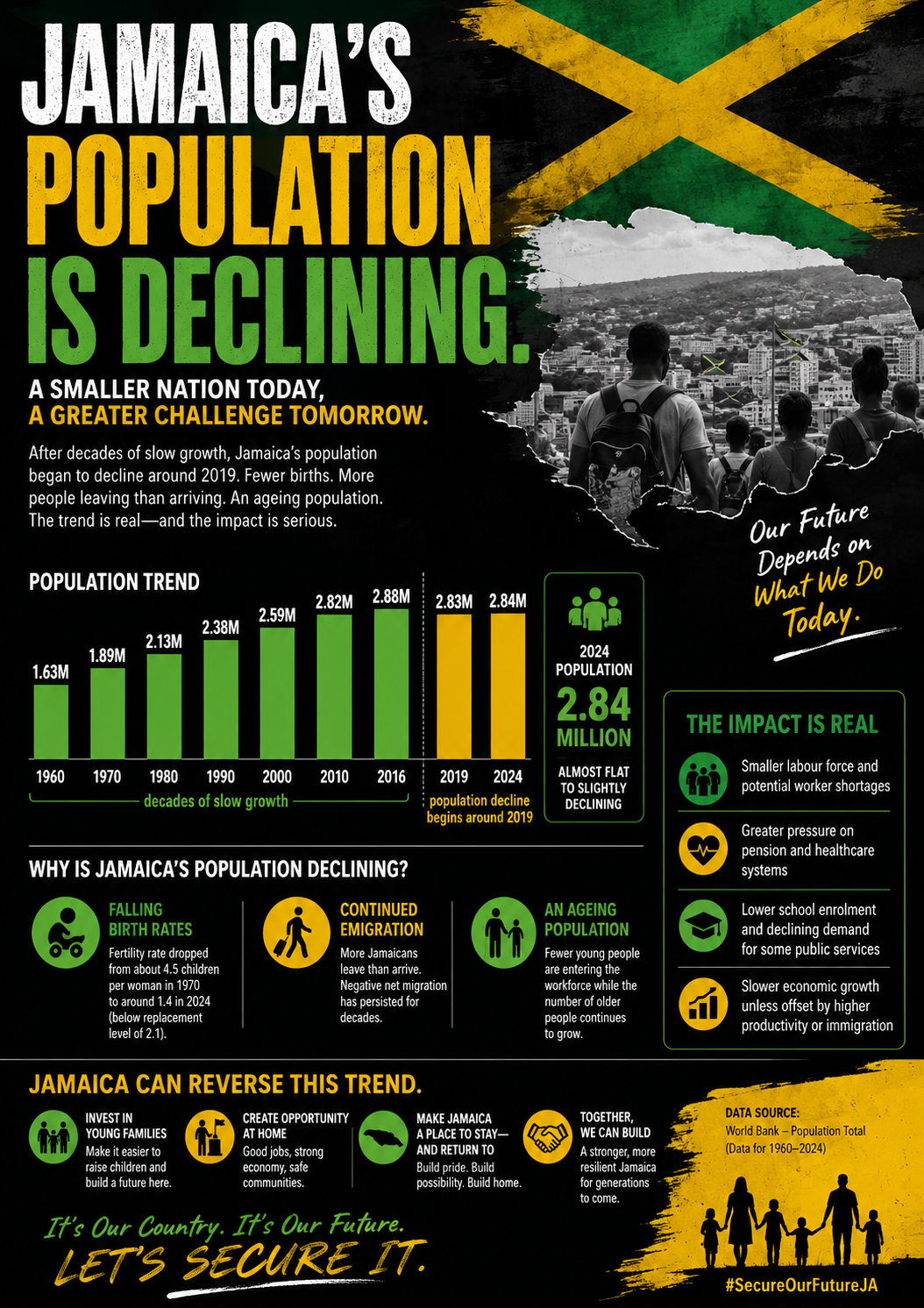
Jamaica’s fertility rate has dropped dramatically—from about 4.5 children per woman in 1970 to roughly 1.4 by 2024, well below the replacement level of 2.1.
- Continued emigration
Jamaica has experienced sustained outward migration for decades, particularly among working-age adults and skilled professionals. The World Bank estimates net migration remained negative in recent years, with more people leaving than arriving.
- Population ageing
With fewer births and longer life expectancy, Jamaica’s population is ageing, meaning fewer young people are entering the workforce while the share of older adults continues to grow.
The turning point
Demographers generally identify 2019 as the point when Jamaica transitioned from decades of slowing growth to actual population decline. Growth had already slowed to almost zero by 2016–2018 before turning negative.
Why this matters
A shrinking population has wide-ranging implications:
A smaller labour force and potential worker shortages.
Greater pressure on pension and healthcare systems as the population ages.
Lower school enrolment and declining demand for some public services.
Slower economic growth unless offset by higher productivity or immigration.
The Planning Institute of Jamaica has described the country as being at a “critical demographic juncture,” citing declining fertility, sustained emigration and population ageing as the principal drivers of the trend.