

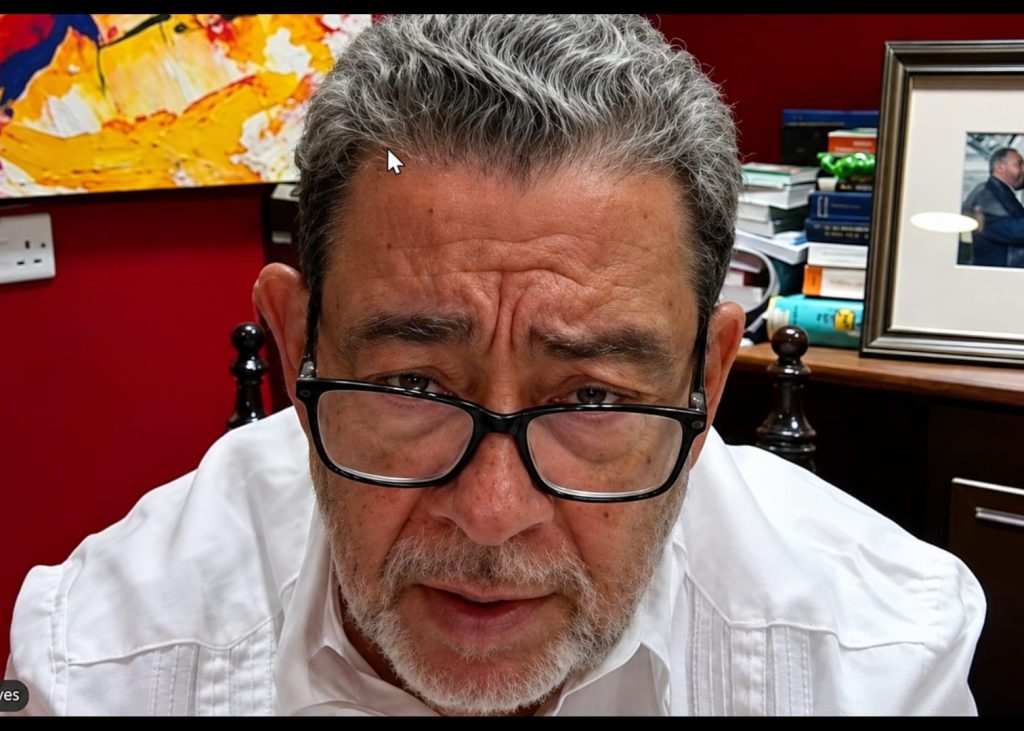
Key political figures and legal luminaries from across the legal, political and civic society landscape convened a “Reasoning” to interrogate a fundamental question for democratic governance: what latitude should the Court exercise when considering policy implemented by Parliament?
The textbook promises three branches of government. Caribbean practice, Dr Christopher Malcolm suggested, often delivers two: an executive commanding Parliament, and the courts left to check it.
That uncomfortable proposition framed a “Reasoning” convened under the Norman Manley Law School’s Thought Leadership in Action initiative, examining how far courts should intervene in policy given legislative force by Parliament.
Malcolm, the school’s principal, urged policymakers, judges, academics and students to look beyond constitutional theory to the distribution of power in practice.
“We speak about three arms of government, but in practice we recognise that, at best, we really have two: an Executive collapsed into a Legislature and the Court,” he said.
Strict party-line voting, he argued, raises questions about whose will Parliament expresses: the electorate’s, Cabinet’s or, ultimately, the prime minister’s.
“If legislative decisions reflect party alignment rather than conscience-driven debate, should the Court intervene when what is presented as the people’s will is actually the will of a very small group?”
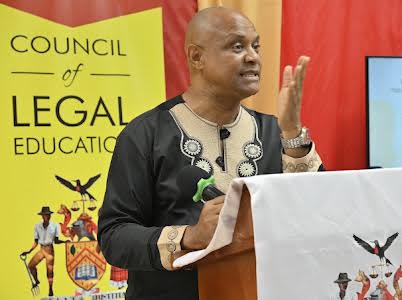
Yet judicial intervention carries its own democratic dilemma. Courts may offer citizens a direct avenue to challenge government, Malcolm observed, while unelected judges remain less directly accountable to the public.
The danger, he cautioned, is exchanging parliamentary overreach for judicial overreach. Legal culture should permit constructive scrutiny of judgments, rather than treating criticism of the bench as inherently improper.
Dr Ralph Gonsalves offered a different assessment of executive power, arguing that governments in small Caribbean societies depend heavily on public consent.
“In our small societies, the so-called power of parliamentarians or even the executive is largely illusory”, he said.
Politicians must periodically answer to voters, Gonsalves noted; holding judges accountable is a more complicated undertaking.
“To deal with a recalcitrant, authoritarian, or thoroughly biased judge takes a much longer period of time because you really have to impeach them—and that is the nuclear solution.”
Institutional friction, however, was neither surprising nor necessarily unhealthy.
“You are always going to have this tension between Parliament and the law courts,” he said. “It is a desirable tension, so long as we stay within the boundaries of the fundamental law of the land, the constitution, and a set of values driving our governance.”
Justin Simon KC, a former attorney general of Antigua and Barbuda, highlighted the danger when political criticism becomes intimidation.
“We have a Prime Minister who has threatened members of the judiciary, stating that he would not hesitate to declare them persona non grata in Antigua and Barbuda,” Simon said.
He also questioned whether parliamentary safeguards were providing meaningful space for opposition scrutiny.
“We have got to recognise that parliamentary standing orders—meant to allow constructive opposition debate—are hardly ever adhered to these days”, he said. “So we can say that the Parliament and the Executive in the Caribbean are conflated.”